PERSPECTIVE NEWS - Sunday 22 June 2003
Living on the
run
Displaced indigenous people living along Burma's Dawna Range live a nomadic existence, one step ahead of the junta-backed Democratic Karen Buddhist Army
A photo essay by Y. UDA
|
|
|
|
What future holds for these homeless children? |
Agony is reflected on the saddened face of this displaced Karen. |
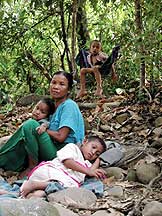

Much is known but little has been done about internally displaced people (IDPs) of Burma, which include not only Karen but also Shan, Kachin and Burman peoples.
|
|
|
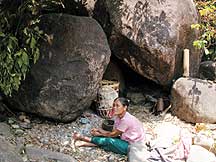
The displaced Karens from Pipowa and Popowalay villages live in a cave. |
|
|
|
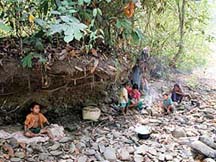
The displaced Karens makeshift huts along the nearby river. |
|
|
|
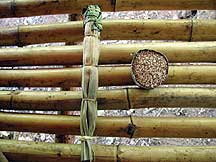
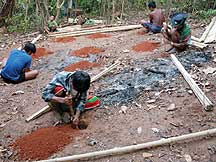
The displaced villagers have to make do with whatever food they can find in the forest. |
|
|
|
Building a new home in the forest. |
|
|
|
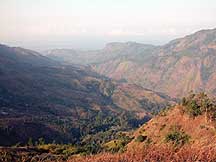
The Dawna Range bordering Thailand and Burma. |
According
to non-governmental organisations there are 600,000 to one million people
scattered inside Burma with little access to the outside world. Hardly any
aid flows into the country to help these desperate men, women and children.
I crossed the Dawna Range in eastern Burma at its second highest point at
almost 1,600 feet. Accompanied by seven Karen soldiers to assure my safety,
we descended the mountain the next day. The Karen later told me that I was
the first journalist to make the trip.
After a few hours hike through the jungle, strewn with landmines, we came
across the first villagers living in a cave. They said they had been in hiding
since the end of January, after their village was ransacked by the Rangoon-backed
Democratic Karen Buddhist Army (DKBA).
On the way to the ransacked village we found more IDPs living in makeshift
shelters along the river banks, bushes and in the mountains.
We spoke to the village headman of Pipowa and Pipowalay villages, who was
also in hiding. He said he had to leave the village because he could no longer
take care of the villagers.
The DKBA soldiers often came to the village and took people away as porters,
he said. If they could not go along the soldiers demanded money from them.
If they could not pay, their pigs or cattle were taken away.
One young woman said she served as a porter for the Burmese army a few times.
Nothing happened to her and she was able to return home safely, but she went
into hiding to avoid a repeat of the experience.
These people lived on frogs and fish from the river. Rice is scarce. To make
money, the villagers make torches which are sold at the market in a nearby
village. With the money they buy rice. Some sneak back to the village to bring
back rice which they have hidden there.
During my six-day stay on the Burma side of the Dawna Range we were always
on the move, with the DKBA soldiers just a few hours away.
Asked why there was no help available from non-governmental organisations,
the displaced villagers said the activists dare not cross into Burma because
the Thai government would stop them. The villagers, in turn, said they did
not want to come to Thailand because they would not be allowed to live freely.